
Guest Blog - Where the Wild Things are by Pari Balu
Once a month from October 2024 - October 2025 we were very fortunate to have two Wild Stewards visiting Hepple from Youngwilders. Lucy and Pari helped out on a huge range of jobs and surveys and Pari has kindly written us a guest blog on her experience.
I had my first taste of Hepple Wilds back in May 2024, at Youngwilders’ first ever Northern Wild Weekend. I remember hovering over the ‘Buy Tickets’ button on Eventbrite, knowing I didn’t know a single person going and that it was the first time I’d done anything nature‑related outside my degree. I went anyway, and alongside finding my place within the young nature enthusiast community, I also felt an instant pull to this wild corner of the world.
Signing up to be a Wild Steward at Hepple was a no-brainer especially after having already come back to assist with remote sensing fieldwork. I’d expected fairly standard conservation work – planting, surveying, the odd ID challenge with a wildflower or grass. I hadn’t expected to get so attached to this patch of Northumberland, or to look forward so much to my one day a month away from city chaos. From each morning cruising through heather‑topped hills with Lucy, the other Wild Steward, catching the first glimpse of the Coquet and slowing to marvel at the Highland cattle in the valley, my Wild days always started as a kind of reset.
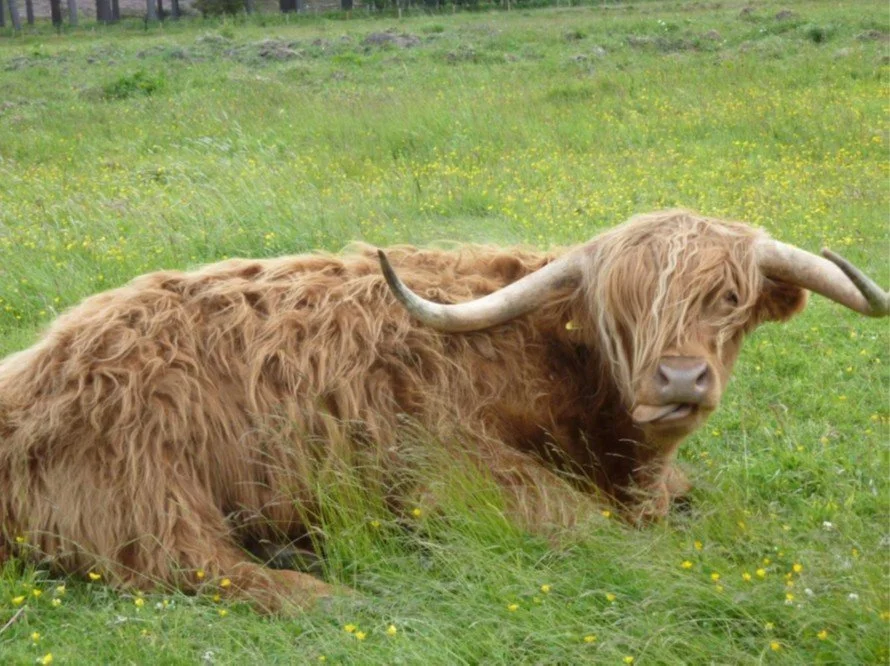
Possibly one of my favourite photos I have ever taken!
In October, we had our first online meeting, where Hepple’s own story was laid out and we started plotting what mark we might leave on this landscape. We were introduced properly to
the current land management - managed wilding, longhorns, Mangalitsa pigs, peat restoration - and began to sketch ideas for the first ever Overgrowth North, which we were already incredibly excited about. And by November, we were finally there.
Driving across the estate this time, I was struck by its sheer scale; my LiDAR excursions and our Wild Weekend treks covered so little of the estate in comparison. The ancient woodland was straight from a fairytale, the purple bogs from folklore and more different landscapes started to unfold in front of us. And then, cutting through the quiet, came one of Hepple’s most unconventional conservation allies: the (formally) five Mangalitsa pigs.
We had stepped down from the vehicle to get a better look, not expecting to get as close as we did. They were wild after all. What we didn’t expect was five curly beasts hurtling towards us, fast enough that we were glancing at Richard wondering if we should dive back in the Rover. They rootled right in front of us, doing a delightful rendition of what they were employed for, tentatively enjoyed a little scratch behind the ears and then we left them to get back to work.
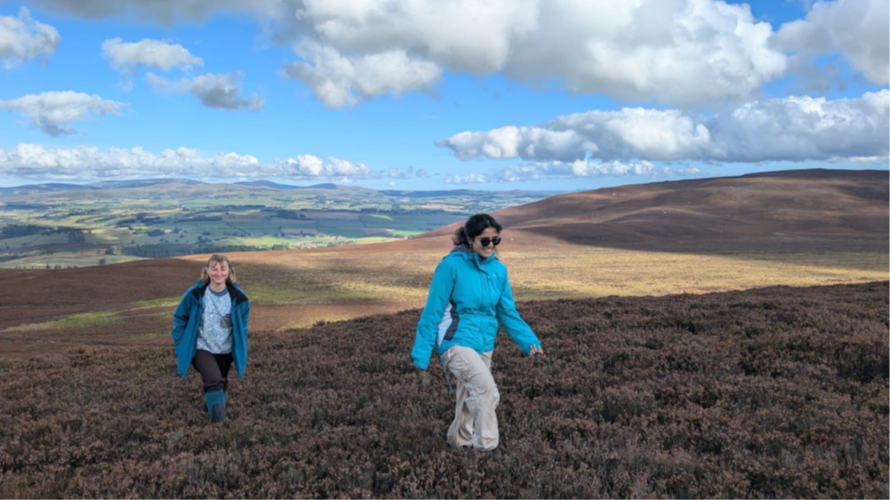
Me and Lucy adventuring through the moors.
Our first ‘proper’ day started with cold fingers and a long fence, and ended with posts wrestled out of the ground, spirals of wire and a more open landscape: a clear route for the pigs to move through. One afternoon flipped that on its head, being indoors, BIOSCAN samples lined up in trays, trying to work out what’s here but at a completely different scale.
The hedge‑laying day ended up as a surprise favourite. We had a proper introduction to different regional styles and the history of Northumberland’s hedges - how they tied into stock, boundaries, and changes in farming - and then got to try it ourselves. There’s a moment where you half‑cut a stem and lay it over that feels deeply wrong until you see the hedge start to build up. By the end we had a very neat laid hedge and, when we revisited seven months later, the difference was striking.
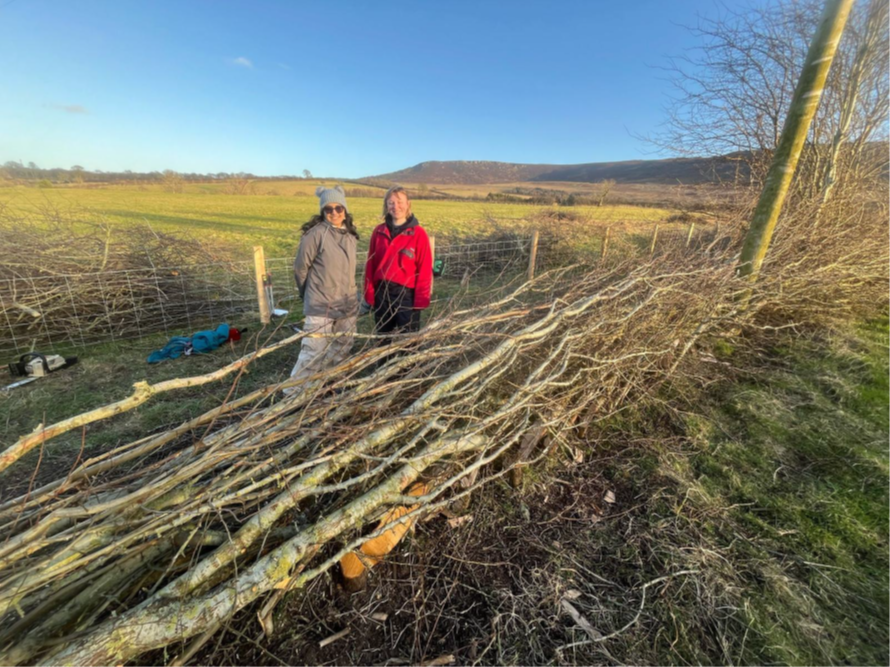
Lucy and I with our lain hedge (February 2025)
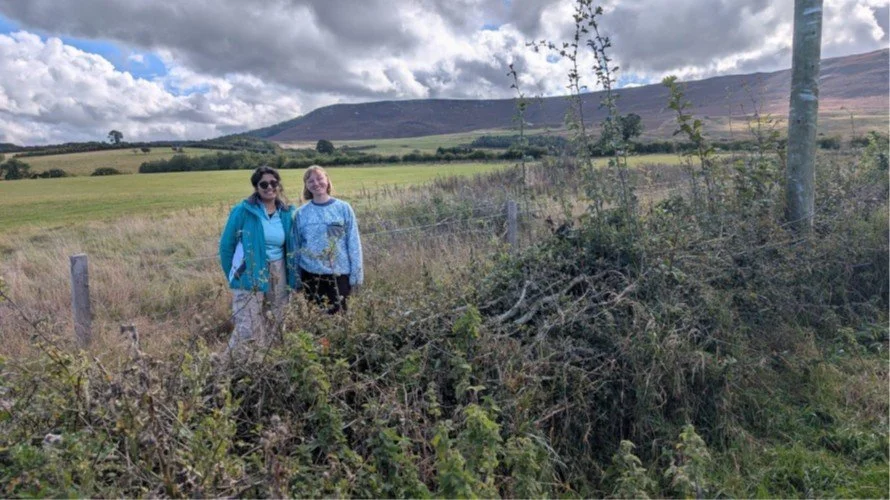
Lucy and I with our lain hedge (October 2025)
The juniper nursery visits gave me a better feel for the timescales we’re working on here: tiny plants in pots, rows of young shrubs, then older stands out on the hill. That same day we started talking more seriously about future surveys, with proper newt and frog‑spawn checks in the ponds and reptile monitoring, rather than just ‘we saw one once’. We finished by finding and laying bits of metal to use as reptile refuges, choosing spots we could actually imagine an adder or slow worm using.
One of my favourite nature sightings came from a morning spent going through trail‑cam footage, logging peaks of red and grey squirrel activity and noting anything unusual. A couple of clips with both red and grey squirrels in the same frame really stuck with me, as did the jays and the pigs wandering through shot.
And then came Overgrowth North, Youngwilders’ youth rewilding summit. That could be a blog post of its own but in short, Overgrowth was electric: spirited, hopeful, and refreshing, thanks to a blend of panels, policy chats, and arts. Being in a room full of people our age, all obsessed with nature in our own slightly niche ways, was grounding in the best way and we’re still in touch, already counting down to Overgrowth North 2026.
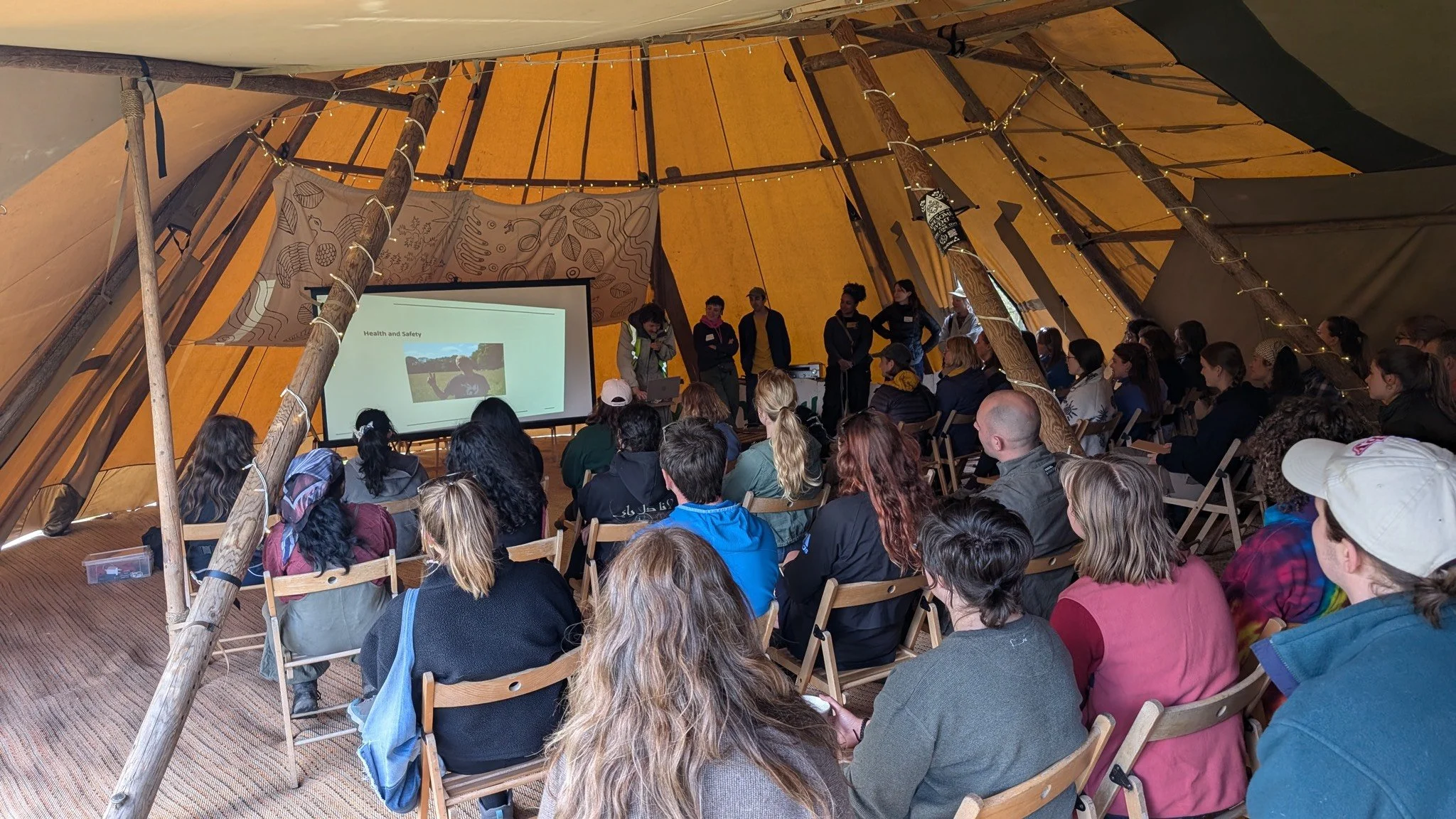
Overgrowth North 2025!
One of the more fieldwork‑heavy days started with designing a methodology for monitoring pig rootling. We worked out how many quadrats we’d need, where to put them, how to split rootled and unrootled controls, and how we were going to stick to DAFOR scales. We decided to record forbs, grasses, bare ground and obvious invertebrates or other species in each quadrat so we could look at both structure and composition. That afternoon we actually used it: four quadrat surveys across different sites, crouched over clipboards, coming away with data that felt solid enough to build on.
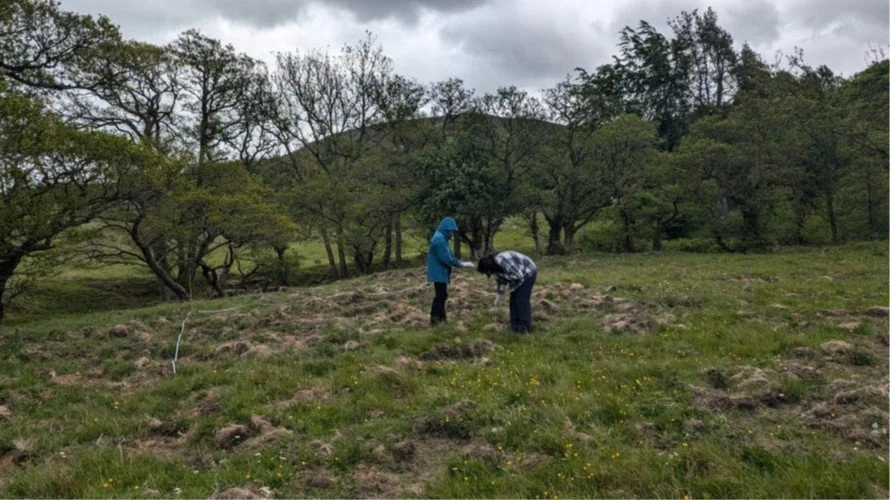
Surveying one of our quadrats where the pigs have done a very good job.
One day, and the only time good weather was not on our side, we also helped with Coquet River surveys, measuring electrical conductivity, pH, phosphorus and ammonia, and doing visual assessments to see if there might be sewage contamination from an old plant nearby. Weaved through all of this were gentler moments: collecting hazelnuts and other seeds and planting them, tiny pieces of how the place will look in ten or twenty years
Towards the very end we did a ‘nostalgia walk’, retracing a lot of the places we'd left our mark: the ex‑fence line, the hedge we laid, the juniper nursery, the pigs’ favourite rooting patches. It was also a good chance to look and listen out for curlew and chiffchaff, both of which had nudged me deeper into birding than I’d expected
The one species on my ‘nature sighting bucket list’, an adder, managed to avoid me for almost the whole year. I’d basically given up. Then one day, when Richard dropped us off so we could walk back to the rootling survey sites, there it was, right on the tyre tracks about two metres ahead: an adder, in full patterned glory. I grabbed Lucy, and we just stood there, completely silent, until the zig‑zags slid out of view.
Finally, we wrapped up the year with a Sitka spruce pulling workshop on the bogs, with about fifteen young people split into two teams. Lucy had made a ‘bog bingo’ for species ID, so between the sphagnum, sundew and cotton grass, we kept a running tally while yanking out saplings. My team powered ahead, leaving what looked like a small sitka graveyard behind us, and by the end we’d pulled around 700 trees in total. In very on‑brand fashion for Youngwilders, Jack, as the Co-Director, turned up dressed as the Grinch, an iconic novelty as we hauled out these Christmas‑looking trees.
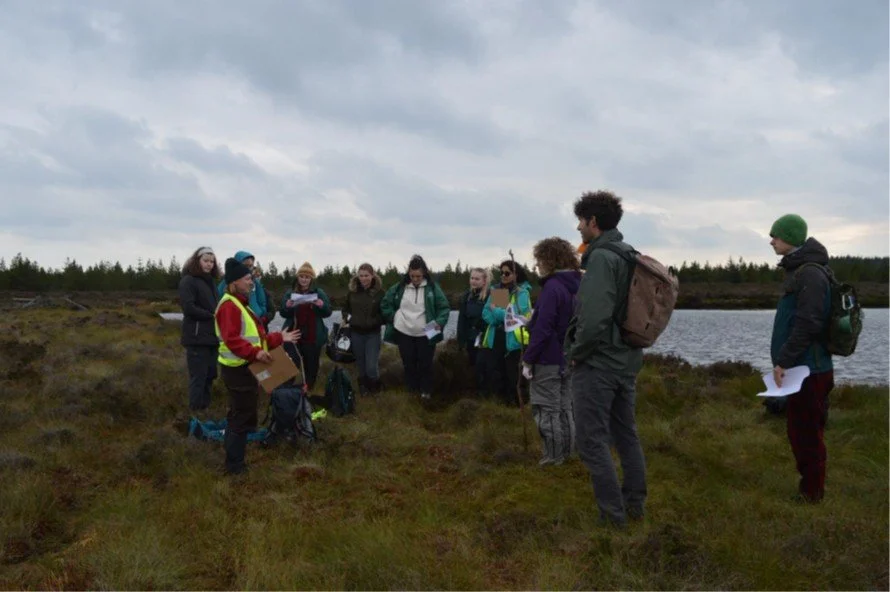
Post sitka-carnage
It felt like the right way to end the year: back where it started, with a bunch of young nature nerds on a hillside, a bottle of Hepple gin in my bag, and the pretty inevitable feeling that I’ll be back here soon, back to this pocket of Northumberland where the wild things truly are.
