
Bioscan Guest Blog
The following blog has been written by one of our wonderful volunteers, Jerry Lanfear. During his career Jerry had a lot of involvement with DNA analysis projects and we are so thankful that he has lent his experience and insight into our own DNA project - that of the Bioscan project we are part of in collaboration with the Sanger Institute. Following some painstaking sorting of invertebrates by two other fab volunteers, Phil & Julie Burns, Jerry has been looking through the 2024 Bioscan data to see what interest we can glean. Huge thanks to Jerry, Phil and Julie and also thanks to the teams at the Sanger for advice and the data generation.
As Hepple goes wild a key aspect of work is to understand changes in the Biodiversity on the estate. As discussed in a blog earlier last year (Springing into action) , and guided by the ecological monitoring advisory panel, the estate has developed a comprehensive monitoring plan to evaluate changes in the ecosystem deploying traditional observational fieldwork, citizen science and cutting-edge data collection and analytical techniques involving bio-acoustics, remote sensing and environmental DNA meta-barcoding. Regarding the latter approach, very excitingly, we have recently started to get results back from the collections of insects we made in 2024!
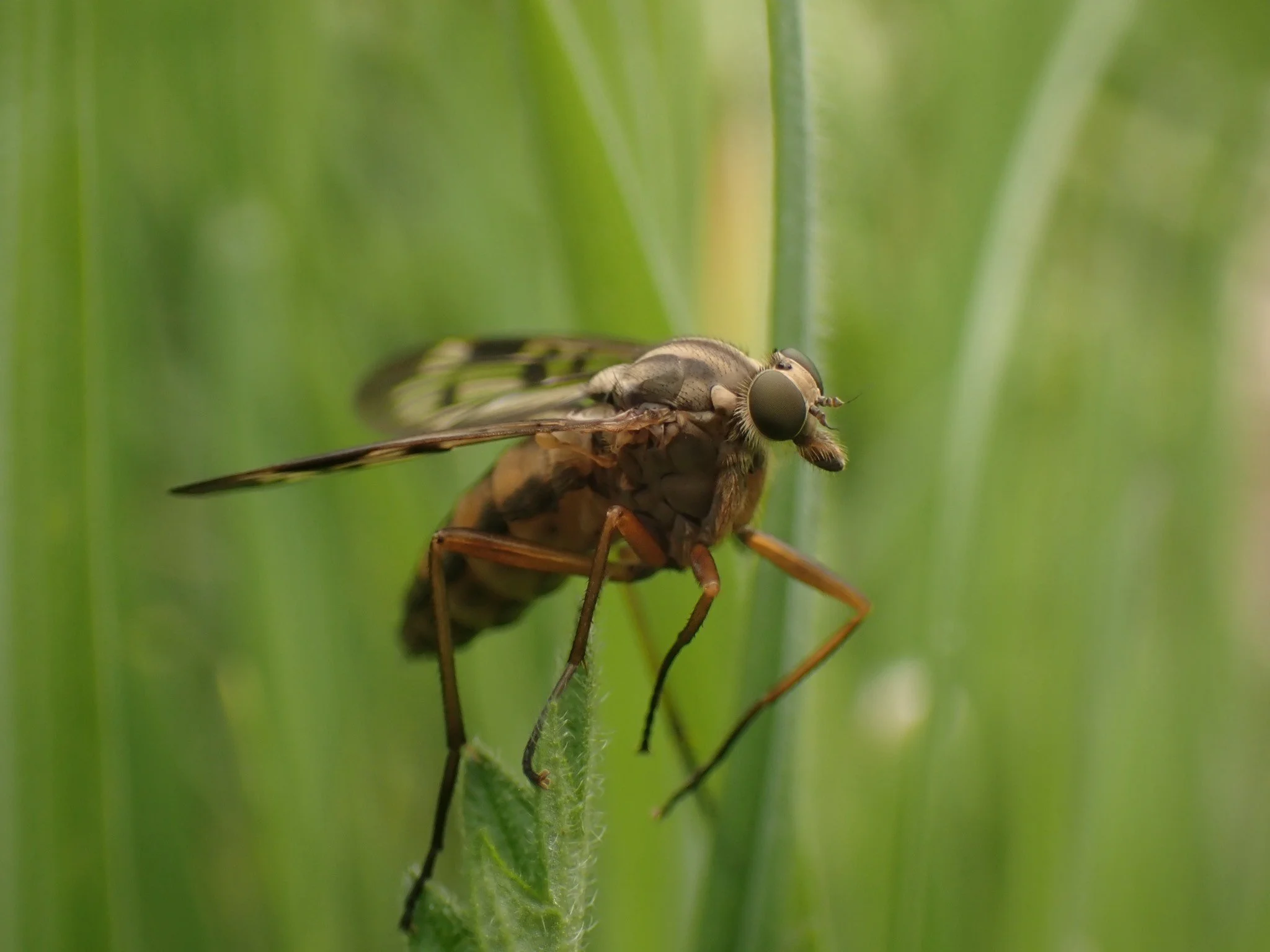
A snipe fly, definitely on the larger side of what was captured © The Hepple Estate
The reason DNA meta-barcoding has been included in the Biodiversity monitoring strategy is that it allows us to detect and monitor species that can be difficult to identify using traditional techniques - at least at scale. Accordingly Hepple was very fortunate to become one of over 100 sites across the UK where insects are being collected on a monthly basis in a Malaise Trap as part of the Sanger’s BioScan project. This project aims to use DNA approaches to identify one million flying insects from across the UK over a five year period. A more detailed description of the wider Bioscan project, and more technical details on how the data is generated, can be found here.
For the project, a single malaise trap is deployed one day a month during the warmer months, and over multiple days in winter. Each time the trap is run it catches several hundred insects (fewer in winter) which are then sorted by some of the estate's other volunteers - largely the local heroes Phil & Julie who come in once a month to do the work. They carefully look through the catch and place each individual insect into one well of a “96 well plate”. Once there are at least ten complete plates, they are sent off to the Sanger for processing, which culminates in the generation of a DNA sequence barcode which usually is unique to that species and is sufficient to identify many of the insects that have been caught. All the sequences generated are then eventually deposited in a Bioscan database, which we have been analysing over the last few months.
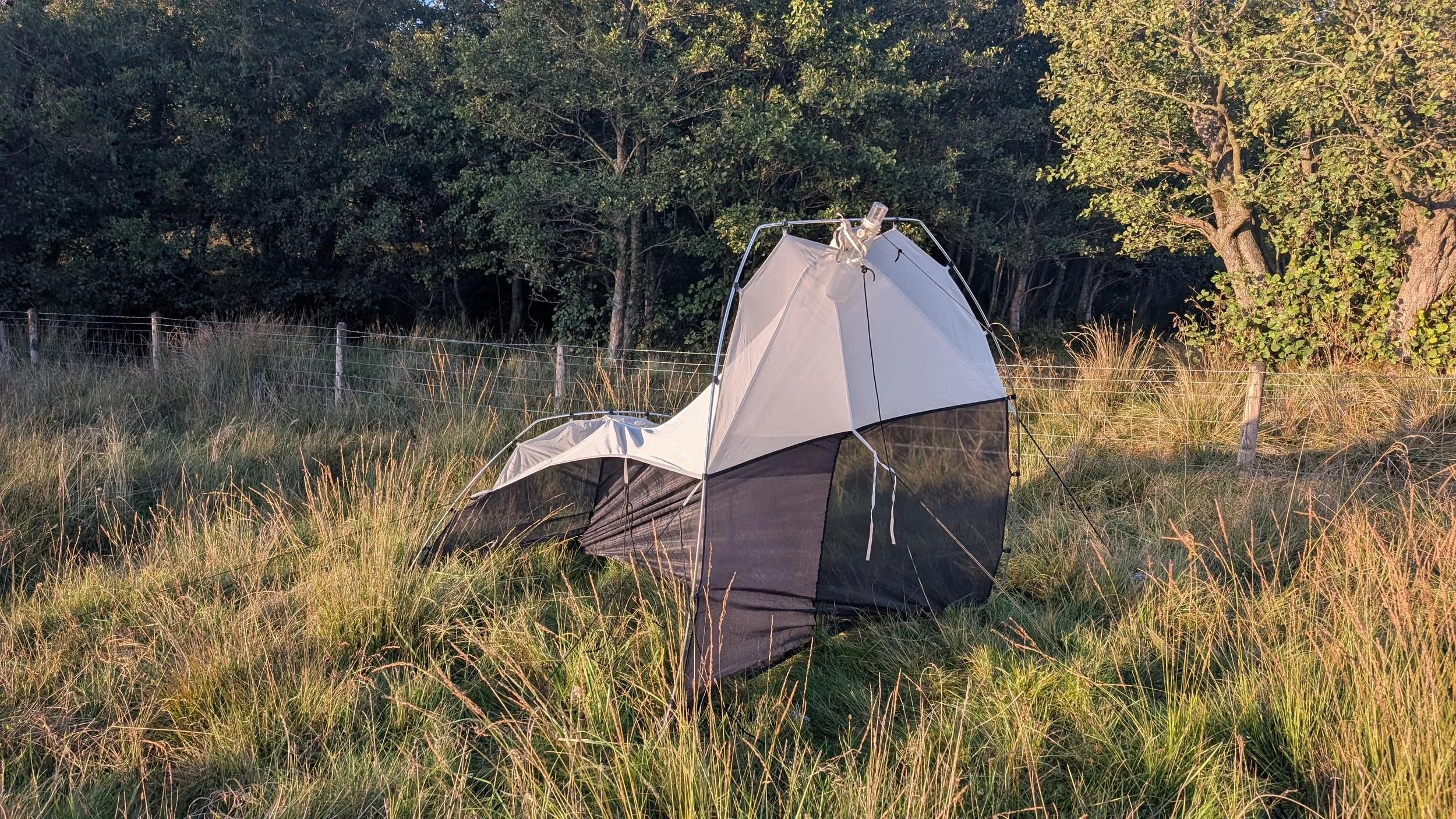
Malaise trap in situ at Hepple © The Hepple Estate
In the first year of doing this work (2024) 1410 insects were caught, of which 871 could be definitively identified to species using their DNA sequence. A few species were caught many times - for instance the Headfly (Hydrotaea irritans), a species known for its role as a pest in agricultural settings, was caught over a hundred times. Interestingly, this species was identified much more commonly at Hepple than at most of the other Bioscan sites, probably reflecting the livestock that are kept near to the Malaise trap on the estate. Overall 231 species of invertebrate were identified, the majority of which were flies. That said, the trap also caught a few species of bugs, beetles, moths, bees/wasps and even one spider. We have now compared these species with the species master-list that is maintained for the Estate and amazingly of the 231 species detected by their DNA sequence only 22 had previously been recorded using other methods. So in the first year using DNA analysis, the recorded biodiversity for Hepple has been significantly enhanced by the identification of an additional 209 species! Of particular interest, the number of fly species recorded has gone from 30 to 186, a greater than six-fold increase.
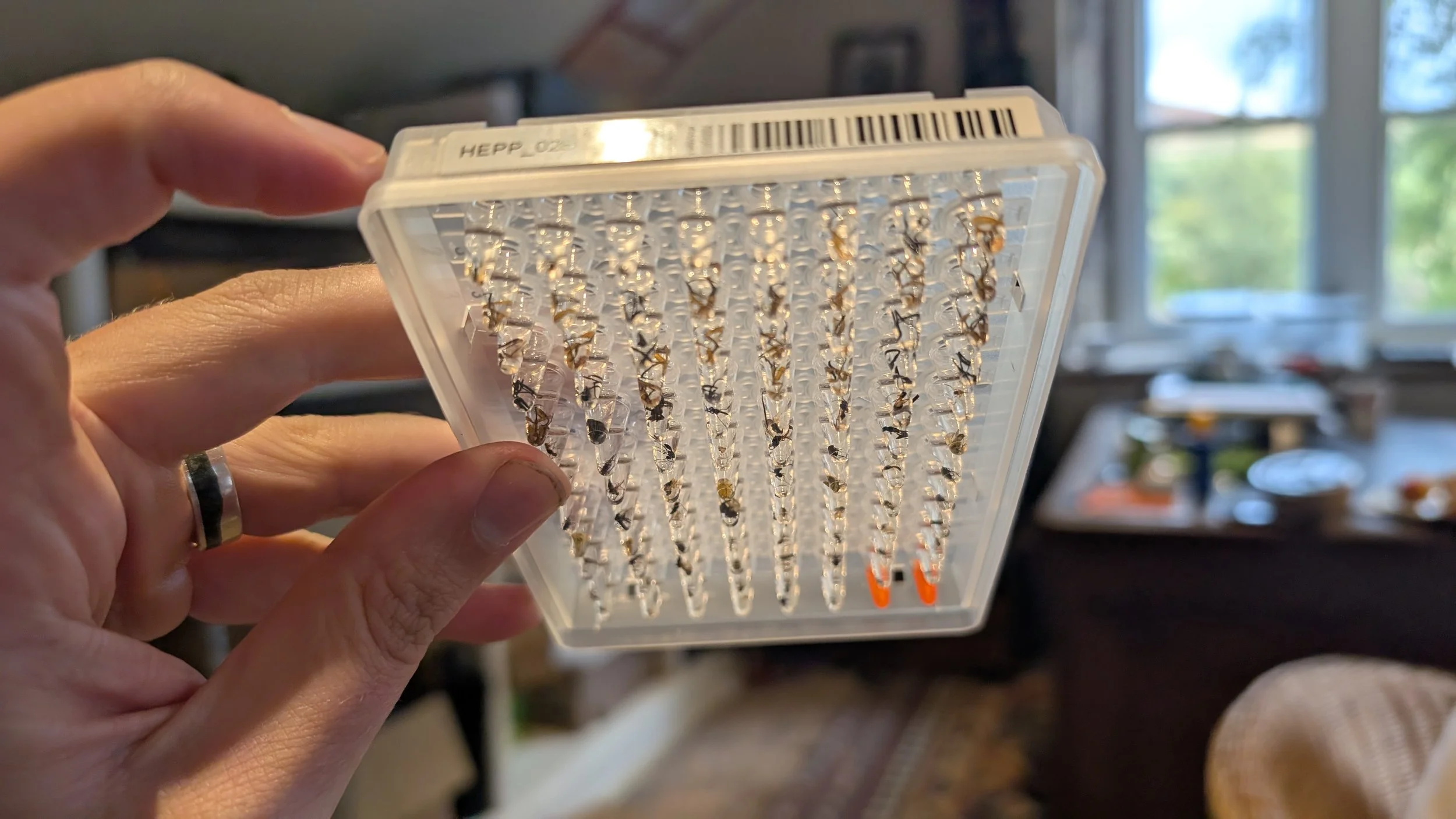
Invertebrates sorted and prepared to be sent off for DNA analysis © The Hepple Estate
Of course, Bioscan is a 5 year study, so we expect to receive 4 further years of data. We do know that 2025 was more productive catch-wise, probably due to better weather, with at least double the number of insects caught. We anticipate the 2025 sequence data in the early part of 2026, and we are eager to analyse that new larger data set - will we find a similar set of species or will there be something new? Extrapolating, looking further ahead, by the end of the study, we hope we will have caught perhaps 10000 insects and detected many hundreds of species, most of which might be new to the estate, a great addition to our understanding of the sites’ biodiversity and very complementary to our other approaches.